- Equity Mates
- Posts
- 📈 Trump attacks US Fed Chair | ACCC targets Woolies, Coles
📈 Trump attacks US Fed Chair | ACCC targets Woolies, Coles
Here's what you need to know today

Today’s Top Stories
Only got a couple of minutes? Here are the key stories you need to know.
Trump attacks US Fed Chair: The Trump administration has subpoenaed the US Federal Reserve, alleging misconduct by Chairman Jerome Powell over the Fed’s US$2.5 billion headquarters renovation. It is widely believed that this is retaliation for Powell refusing to give in to Trump’s request that the Fed lower interest rates. (FT)
Woolies, Coles could face price gouging lawsuit: The Australian Competition and Consumer Commission expects to launch legal action against Woolworths and Coles in the next year over alleged price gouging. The ACCC claims the grocery giants misled customers by advertising dropped prices when they had actually increased them. (AFR)
Google brings ads to AI: Google is introducing personalised ads for hundreds of millions of Gemini AI users. Users searching for product suggestions will soon receive sponsored recommendations. (FT)
Cyclone Koji softens, flood fears remain: Tropical Cyclone Koji has been downgraded to a tropical low, but major floods are still a risk as heavy rain will continue to hit Queensland over the next two days. (Guardian)
What’s Making News?
A look at the stories making headlines and moving markets.
Australia
550,000 Meta accounts deactivated under ban: The company has reported that it deactivated over half a million accounts across Instagram, Facebook, and Threads in the first week of the under-16s social media ban. (Guardian)
Government to subsidise weight-loss drug: Wegovy will be added to the Pharmaceutical Benefits Scheme, saving patients with severe obesity and heart disease thousands of dollars. (ABC)
Star to close head office: Star Entertainment will close its Brisbane head office and move management functions out to individual casinos, potentially leading to hundreds of layoffs. Star was on the brink of administration in March but was bailed out in a $300 million deal with Bally’s Corporation, a US casino giant. (AFR)
Private healthcare woes continue: Health insurers are warning Labor’s proposed benchmark pricing model for hospitals could raise prices and cause half a million Australians to drop out of the private health system. Private healthcare has suffered lately; Healthscope, Australia’s second-largest private hospital, is in administration and may have its assets sold to private equity firms, and three other private health firms recently entered administration. (AFR | AFR | Herald Sun)
Global
Geopolitical oil market turbulence: Canadian oil and gas companies are scrambling to diversify exports away from the US as President Trump declared Venezuelan oil will flow into Texas refineries, potentially undercutting Canadian oil. At the same time, oil prices have risen due to protests in Iran creating supply uncertainties. Finally, US ambitions in Greenland appear to be increasingly motivated by oil; Greenland sits on up to 90 billion barrels of oil, enough to supply the world for three years. (BBC | WSJ | Yahoo Finance)
Chinese AI fuels IPO surge: Four Chinese AI-related companies went public this past week, with one of them trading up over 100% on its first day. MiniMax, a Shanghai-based competitor of DeepSeek, rode investor enthusiasm to a first-day performance of 109%, highlighting optimism around China’s advances in AI. (FT)
Trump announces credit card rate cap: US President Trump announced a one-year cap on credit card interest rates that will limit rates to 10%. (Guardian)
Trump Org announces $10b of Saudi projects: The Trump Organisation announced US$10 billion of luxury developments in Saudi Arabia in collaboration with real estate developer DarGlobal. These include a $7 billion Trump-branded hotel and a $3 billion Trump Plaza tower. (FT)
Malaysia joins Indonesia in banning Grok: xAI’s chatbot Grok has drawn public outrage for producing sexualised pictures of real people, leading to Indonesia and Malaysia blocking the application. Indonesia’s government proclaims it is firmly against non-consensual sexual deepfakes, and Malaysia is planning to bar children under 16 from social media. (NYT)
Company Watchlist
Here are the companies with big announcements or price movements
Poker machine giants settle after two-year clash: Poker machine maker Light & Wonder will pay $190 million to rival Aristocrat to settle a lawsuit claiming it copied one of Aristocrat’s most popular games. Light & Wonder stocks rose over 30% on the news. (AFR)
Boeing on track for record deliveries: Boeing is set to report the highest volume of airport deliveries since 2018. The aerospace giant has undergone a turnaround following years of safety concerns and is now set to ramp up production. (CNBC)
GM reports $7bn earning loss from EVs: GM will record a one-time earnings hit of over $7 billion, mostly due to its pullback from EV investments caused by US government policies shifting away from EVs. (Guardian)
What’s got us thinking
Investing is a lifelong journey. Here’s what we’ve been learning lately.
Small fees, big costs
On a recent episode of Equity Mates Investing, Bryce and Ren talked about keeping costs low, particularly fees on your investments. Brokerage fees, management fees, fees on profits, no matter the name. These fees appear small, but can seriously impair the compounding of your investments over your lifetime.
A good example of this is Warren Buffett’s investment company, Berkshire Hathaway, which famously does not charge fees (it also doesn’t pay dividends, but that’s another topic). Assume you made a one-time investment of $1,000 in Berkshire Hathaway all the way back in 1965. By 2022, this would have been worth $38 million.
This is a fee-free scenario. Introducing a 1% fee would drop your investment from $38 million to $35 million — not too horrible. However, double that fee to 2% and your investment drops to $12 million by 2022. Finally, change that fee structure to the popular “2 and 20” fee structure, which is a 2% flat fee and a 20% fee on profits, and you’re sitting on $9 million. This is visualised below:

This speaks to the power of compounding, or in this case the power of negative compounding. By reducing the compounding of your investment by just 2% per year, you could lose over two-thirds of your investment to fees.
Catch the full episode here.
A message from PocketSmith

Getting serious about investing is much easier when you know what you can actually afford to put in. PocketSmith connects to your bank accounts and automatically categorises your spending, so you can see exactly where your money’s going.
From there, you can set simple budgets and use the forecasting tools to test “what if I invest $X each month?” around your bills and paydays. With your spending, savings and investments all contributing to a living net worth, you can choose an investing amount that actually works.
Right now, PocketSmith is offering 50% off the first 2 months of a Foundation Plan. To try PocketSmith for yourself and claim this deal, head to pocketsmith.com/equitymates
What the…?
A look at one story that has us scratching our head
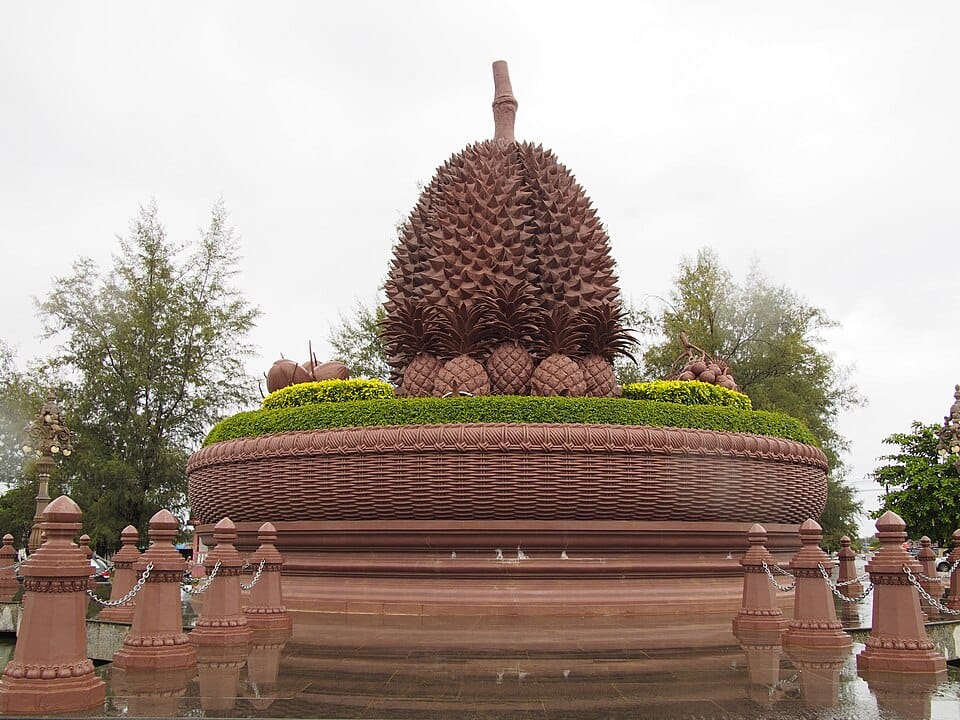
A former gold mining town in Malaysia is benefitting from sky-high demand for a new golden commodity. The town of Raub is a leading producer of durians, a spiky odourous fruit that has burst into the spotlight due to sudden demand from Chinese consumers. Raub is the home of the Musang King durian, which is known as the Hermes of durians and can fetch up to $140 per fruit.
The durian industry has benefitted from surging demand in China, which imported $10 billion of the fruit in 2024, totalling 90% of global demand. Durian fields that were once cut down in favour of oil palms are once again being used to grow durians in South East Asian countries. Beijing has hurriedly signed durian trade agreements with major producers like Thailand, Vietnam, and Malaysia.
But with more money comes more problems. Thai durians were found to contain a carcinogenic dye intended to make the durians more yellow, and Vietnamese coffee farmers unintentionally spiked global coffee prices by pivoting from coffee to durians. South East Asia’s new pungent cash crop will certainly drive economic activity in the region, but the industry is going through growing pains on its way there. (BBC)