- Equity Mates
- Posts
- 📈 Australian home buyers stay away | Disney CEO’s shocking week
📈 Australian home buyers stay away | Disney CEO’s shocking week
Here's what you need to know today
Today’s News
The Big Picture

Auction clearance rate hits lowest level in 4 years. With a protracted conflict in Iran and uncertainty over inflation and interest rates, Australian property buyers are staying away. This weekend’s auction clearance rate was just 60.9% nationally, the lowest level since December 2022. (AFR)
Allies disagree on Iran. After US President Trump pledged to pause strikes on Iran’s energy infrastructure, Israel attacked two of Iran’s nuclear facilities. This attack led the International Atomic Energy Agency to warn of the risk of a “major radiological accident”. In response to Israel’s attack, Iran’s foreign minister Abbas Araghchi threatened to exact a “heavy price”. (Al Jazeera)
US stocks have their worst month in 4 years. America’s S&P 500 dropped for the 5th consecutive week as the Brent Crude oil price rose back above $110 a barrel. Since the US and Israel attacked Iran, the S&P 500 is down 7.4% - making March 2026 the worst month for the US stock market in 4 years. (ABC)
Europe’s jet fuel supplies run low. Imports of jet fuel into Europe are expected to drop 40% this week, and some airlines are warning of shortages within weeks unless supply normalises. Airline analysts expect that if oil flows do not restart, flights may be cut towards the end of April. (FT)
More social media bans. As Indonesia’s under-16’s social media ban went into effect over the weekend, Austria became the latest country to follow Australia’s policy lead. Austria’s proposal would ban children under 14, rather than Australia’s under-16 ban. At least a dozen countries, including Britain and Spain, are considering policies like Australia’s. (BBC)
Companies in the news

A tough first week at Disney. Josh D’Amaro, the entertainment giant’s new CEO, had a tough first week on the job: a $1bn deal with OpenAI unravelled, falling demand at key gaming partner Epic Games saw 1,000 jobs cut, and one of the flagship shows on its ABC TV network, the Bachelorette, was shelved in scandal, reportedly costing $60m. Disney shares were down 8% last week. Welcome to the top job Josh. (FT)
US Government investigates Paramount and Warner Bros deal. The Department of Justice has sent subpoenas to the two large Hollywood studios as it investigates how the proposed US$110 billion merger will impact competition in Hollywood. Warner Bros shares are down 4% in the past month, reflecting a slight drop in the probability that the deal will be completed. (Reuters)
OpenAI’s ad trial seen as success. The company reported that it brought in US$100 million in annualised revenue in under two months. Or, put in a less confusing way, brought in roughly US$15 million revenue in under two months. OpenAI’s decision to introduce ads to ChatGPT was ridiculed by rival Anthropic in a Super Bowl ad, but OpenAI claim they have not seen any impact on privacy-related trust metrics. (CNBC)
Claude’s latest victim: cyber security stocks. A recent report found that Anthropic’s latest AI model may be used by hackers to circumvent cyber defences. Cyber security stocks dropped on the news: Crowdstrike and Palo Alto Networks were both down 6% on Friday. (Fortune)
Kathmandu owner struggles with emergency capital raise. KMD Brands, the company behind Kathmandu and Rip Curl, has reportedly struggled to raise money at a price of $0.10 a share, a meaningful discount to the current $0.16 share price. This inability to raise capital has forced the company to delay releasing its half-year results. (AFR)
BYD’s profit drops for the first time in four years. The Chinese electric vehicle maker reported profit dropped almost 20% in 2025. This comes as domestic subsidies for electric vehicles end in China at the same time that rival Chinese EV makers challenge BYD around the world. (FT)
Sony raises prices of Play Station 5. Weeks after Sony delayed the launch of the Play Station 6 from 2027 to 2029 because of the availability of memory, the Japanese company has now raised the price of the Play Station 5 by up to $150. The cause is the same, the surging price of computer memory as AI companies buy anything they can get their hands on. (CNBC)
LVMH investigated for childhood skincare boom. Italy’s competition watchdog is investigating two LVMH-owned skincare brands, Sephora and Benefit, about whether the brands make it clear their products are not for children. Italy’s regulators believe the two companies’ advertising is contributing to a growing childhood fixation with skincare. (FT)
What the…?

US pays $1bn… for a wind farm not to be built. The White House will reimburse French energy giant TotalEnergies US$1 billion, covering what the company had already invested in offshore wind leases, in exchange for scrapping the project and redirecting the funds into liquefied natural gas (LNG) instead.
TotalEnergies will now shift its focus from the planned wind farm to developing LNG projects in Texas. President Donald Trump has long criticised offshore wind, repeatedly describing turbines as costly and, in his words, “ugly.” (CNBC)
A message from Australian Property Scout
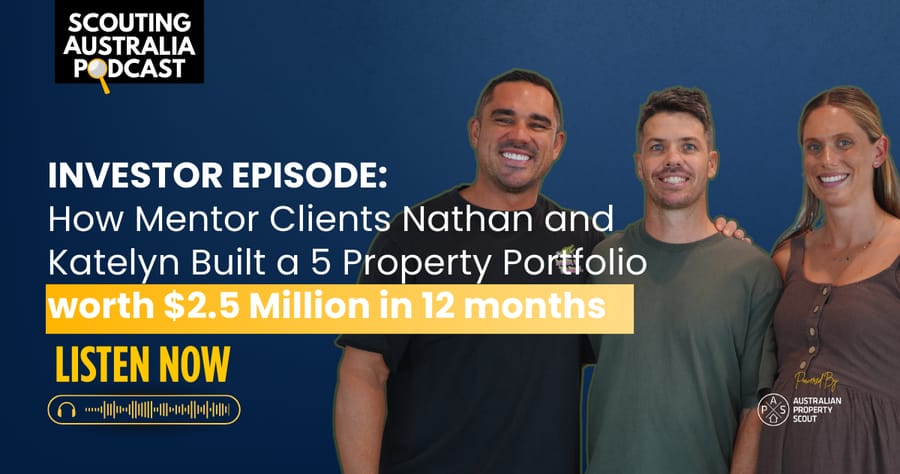
Join Sammy Gordon, Equity Mates’ go-to property expert, as he sits down with 2025 mentoring clients Nathan and Katelyn to unpack their inspiring property investment journey.
They share candid stories of sacrifice, mindset shifts and overcoming personal challenges plus how they went from feeling stuck to acquiring 5 properties in just 12 months.
If you’re serious about building momentum in your own property portfolio or want a real glimpse into the mindset and community behind investor success, this episode is packed with inspiration and practical takeaways.
Available on all your favourite platforms.
Today’s Insight
A Simpler Gas Tax
There's been plenty of talk recently around raising the taxes on Australian gas with rising LNG prices due to the ongoing war in Iran. But last week on Equity Mates Investing we unpacked a simpler and more effective fix.
This was taken from our recent Equity Mates Investing episode titled ‘Our Gas Tax Proposal, a Biotech Stock Pitch & the Latest on Property Prices’ (Spotify | Apple | YouTube).
Ren: We should simply align our tax arrangements for onshore gas producers with offshore gas producers.
Offshore, the federal government charges a petroleum resource rent tax as its federally regulated, which is a tax on profit. Onshore, states charge royalties, which is basically a tax on revenue. i.e. In New South Wales, there's a 10% royalty on any gas extracted.
The problem with the tax on profits, particularly for these offshore gas producers, they're very good at making sure there are no profits, particularly with carry forward losses. They make sure that they're not paying tax. The ATO have labelled Australia's oil and gas industry "systematic non-payers of tax." The ATO don't expect some of these companies to pay any petroleum resource rent tax until well into the 2030s.
One example that illustrates the point, Japanese company Inpex. They export more gas each year than is used by New South Wales, Victoria and South Australia combined. The don't sell gas to Australians, except in emergencies. They've paid no royalties, no petroleum resource rent tax, and no corporate tax on $21 billion worth of gas exports between 2015 and 2025. If these companies are good at making sure there is no profit on paper, then the tax won't be effective.
We should be looking at a royalty. It's not radical. We do it on all types of commodities.
Queensland coal. Queensland charges 7% royalty on coal. Iron ore, WA charges 7.5% royalty on any iron ore crushed and exported.
Currently, 56% of the gas that we export from Australia is royalty free. Over the past four years, that was $149 billion worth of gas.
Let's not tax profits. Let's just align offshore tax policy with onshore tax policy and put a royalty on it.
Want to check out the full episode? Listen wherever you listen to podcasts or watch on YouTube.