- Equity Mates
- Posts
- 📈 2.7m Aussies eye pay bump | Meta & Google lose big in addiction case
📈 2.7m Aussies eye pay bump | Meta & Google lose big in addiction case
Here's what you need to know today

Today’s News
The Big Picture

Government backs real wage increase. Treasurer Jim Chalmers and Employment Minister Amanda Rishworth have called for an above-inflation rise in the minimum wage as part of the Fair Work Commission’s annual review. Around 2.7 million Australians are currently on the minimum or award wage, set at $948 per week. The ACTU is pushing for a 5% increase, while business groups are calling for 3.5%. (ABC)
Fuel crisis triggers second national cabinet. Prime Minister Anthony Albanese has called another emergency national cabinet meeting as fuel shortages begin to disrupt essential services, including freight and waste collection. The government says 470 service stations have run out of at least one type of fuel. (ABC)
US talks up peace, Iran shuts it down. US President Donald Trump claims Iran is quietly engaging in talks but is “afraid” to admit it. Iran’s foreign minister has rejected this, saying there is “no intention of negotiating for now”. The US has reportedly sent a 15-point peace plan, with Iran offering its own conditions in response. (BBC)
Trump delays China trip. Donald Trump has postponed his planned May 14–15 meeting with Chinese President Xi Jinping due to the Middle East conflict. The trip would mark the first visit to China by a US President since 2017, which he has labelled a “historic visit”. (BBC)
EV searches surge as fuel prices rise. Google searches for electric vehicles in Australia jumped 278% on March 23 compared to the previous month, coinciding with rising oil prices. A similar spike was seen in 2022 after Russia’s invasion of Ukraine, highlighting the link between petrol prices and EV interest. (ABC)
Property drives household wealth higher. Australian household wealth rose 2.5% in December, according to the ABS. Residential property values increased 3.2%, contributing the bulk of the gain, while superannuation added just 0.3 percentage points. (ABS)
Companies in the news
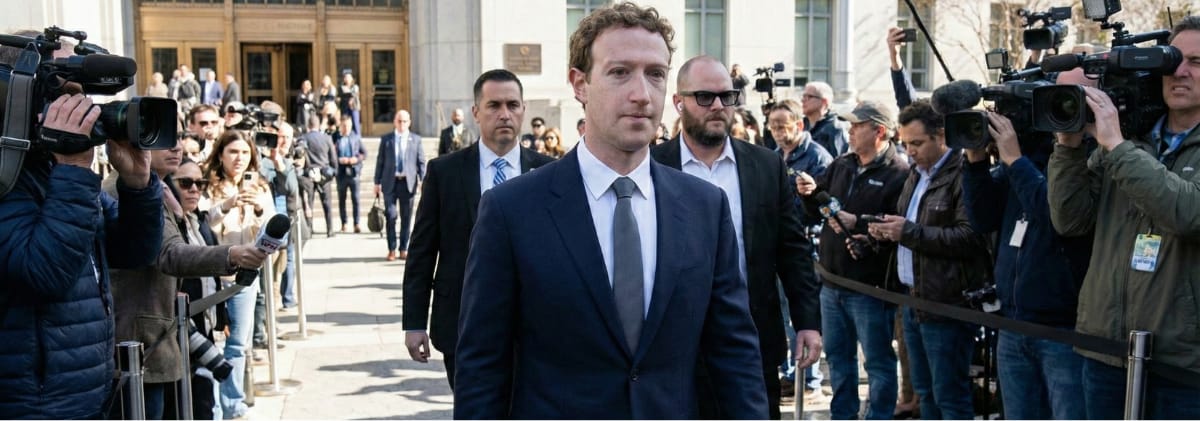
Meta and Google lose landmark addiction case. A US jury has found the owners of Facebook, Instagram and YouTube are all liable for designing platforms that contributed to social media addiction. A 20-year-old plaintiff was awarded $6m in damages, which could prove instrumental for future cases. Both companies have said they will appeal. (BBC)
Dividend season delivers $23bn windfall. ASX investors are set to receive $23bn in dividends over the next two weeks, with payouts from BHP, Woodside, Telstra, CBA, Wesfarmers and Fortescue. The influx could provide a boost to local markets. (AFR)
SpaceX eyes record-breaking IPO. Elon Musk’s rocket company is reportedly planning to raise US$75bn, which would make it the largest IPO in history, surpassing Saudi Aramco’s US$29bn listing. At a US$1.75 trillion valuation, it would rank among the most valuable companies globally. (FT)
Macquarie warns on private credit risks. CEO Shemara Wikramanayake says liquidity issues in private credit markets, particularly for retail investors, could spill over into institutional markets. “There is a liquidity issue, which could cause a credit issue if people panic and rush to exit,” she said. (AFR)
Apple tests standalone Siri AI app. Apple is preparing to launch Siri as a standalone app on June 8, aiming to transform it into a full AI assistant. The move comes as it looks to compete with ChatGPT, Claude and other AI tools. (AFR)
What the…?

Pen and paper beats the market. Researchers from Macquarie University and UTS have found institutional investors gained an edge by submitting trades via handwritten forms instead of electronically. Because the forms were slower to process, details of those trades took an extra 2–4 days to become public.
That delay translated into performance. Handwritten trades delivered returns of more than 3% after 30 days, compared to flat returns for digital submissions. After 252 days, the gap widened to around 12%.
ASIC has flagged it will move to make all submissions “machine-readable”, closing the loophole and, presumably, ending the era of alpha via biro. (AFR)
A message from Australian Property Scout

Join Sammy Gordon, Equity Mates’ go-to property expert, as he sits down with co-host Jimmy Ibrahim and APS Portfolio Strategist Luke Teeuwsen to tackle the challenges and opportunities facing first-time property buyers in 2026.
They unpack the realities of breaking into the market, sharing practical numbers and strategies while busting myths around minimum budgets, government deposit schemes and the pressure of keeping up with the Joneses.
If you’re serious about getting started in property or want to understand what it really takes to build a portfolio from scratch, this episode is packed with practical insights for first-time buyers ready to take action.
Available on all your favourite platforms.
Today’s Insight
Ask an Adviser - Saving for a Deposit vs Investing
Matt Ingram from Northhaven unpacks how first-home buyers should consider investing compared to saving for an initial deposit.
How should first-home buyers think about investing vs saving a deposit?
Saving a deposit without help from parents or family is hard and it can take years of discipline, so you want to make your money work for you to get you there faster. However, you also can’t afford to take risks that could set you back right before you’re ready to buy.
So, the first question to ask is simple: when do you realistically want to purchase? If you’re planning to buy within the next three or four years, I’d generally stick with a high-interest savings account (HISA). Some HISA rates are reasonably competitive at the moment, even if they come with hoops to jump through or limits on how much you can earn bonus interest on. Before I bought my first place, I had four different savings accounts across different banks, each holding part of my deposit. It wasn’t elegant, but it squeezed out a bit more interest at a time when every dollar mattered. When your time frame is short, stability matters more than chasing higher returns. A 20% market drop six months before you want to exchange contracts is not something you can just “wait out” if you need the money. If you’ve got more time, say four years or longer, investing can start to make sense. But there are two important caveats.
Don’t invest everything. You might split your monthly savings, with part going into your HISA and part into investments. That way, you’re still building a guaranteed base while giving a portion of your money the chance to grow. It reduces the risk that market volatility derails your entire plan.
Diversification is critical. This is not the time to back a handful of individual stocks because you’ve read a few headlines or seen strong past returns. Concentrated bets can undo years of saving. If you’re going to invest, broad, low-cost ETFs that spread your money across hundreds or thousands of companies are usually the more sensible approach. You’re aiming for steady, long-term growth, not a home-run.
Want to work with an adviser like Matt and chat about how you should save for a first-home deposit? Fill out the form on our website and we’ll match you with one of our hand-picked advisers.
Today in Equity Mates
Today on Equity Mates Investing we chat with Kerry Craig, Managing Director and Global Market Strategist from JP Morgan Asset Management. Most investors pick a lane - active of passive - but Kerry argues that the real edge comes from blending both. Check out the episode in the following links (Spotify | Apple | YouTube)